From Small-Town India to Intel’s Leading Edge: Anusha Balachandran ’17 Content
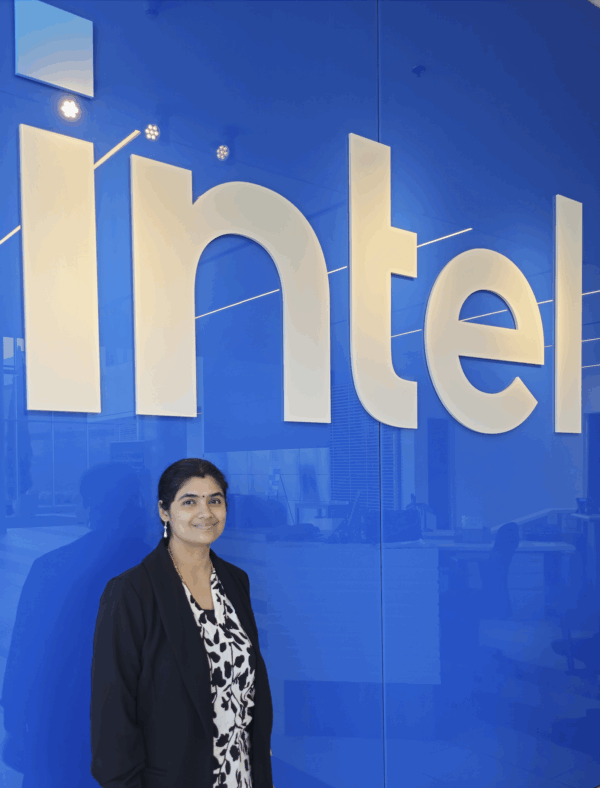
Anusha Balachandran’s journey into the world of semiconductors is a story of vision, persistence, and transformation—one that began in a small town in India and now continues at the forefront of innovation at Intel.
From an early age, Balachandran was captivated by the idea that the smallest of materials could reshape entire industries and societies. That curiosity became her compass, guiding her across continents to the University of South Carolina, where she immersed herself in the demanding yet rewarding world of semiconductor research.
At USC’s SiC lab, Balachandran focused on advancing materials that could make electronics faster, more efficient, and more durable. She worked with silicon carbide, a material especially important for devices that need to handle high power and high temperatures—such as electric vehicles, renewable energy systems and next-generation sensors. Her research explored how to grow higher-quality silicon carbide layers and even combine them with graphene, a material known for its exceptional strength and conductivity. This opened the door to creating hybrid devices with far greater performance. She also tackled one of the biggest challenges in semiconductor technology: reducing defects that can weaken or shorten the life of devices. By finding ways to make these flaws less harmful, her work contributed directly to making electronics more reliable and sustainable.
Her time at USC was marked by long hours in the lab punctuated by moments of reflection and balance. A swing tucked behind the research building became her sanctuary, while the nearby campus Starbucks often fueled late nights of experimentation and analysis. These quiet respites helped sustain her through the rigor of her research.
This formative experience became the launchpad for Balachandran’s next chapter: Intel. Joining the company as a process engineer, she quickly applied her expertise to maintaining high-temperature anneal equipment and developing new processes for gate-all-around transistors. Her contributions directly impacted performance and yield on other upcoming Intel nodes that drives America’s innovation forward in chip manufacturing with respect to annealing process. Drawing on her academic background in semiconductors and her hands-on skills with CVD equipment, device fabrication, and defect analysis, she adapted seamlessly to the high-stakes pace of semiconductor manufacturing.
Looking back, Balachandran’s trajectory is both humbling and inspiring—a testament to how a dream sparked in a small Indian town can thrive on the global stage of innovation. Her story underscores the power of persistence, resilience, and curiosity in shaping one’s path.
Today, as she continues her work at Intel, Balachandran sees her role not only as an engineer but also as an example for aspiring innovators. Her journey affirms that with courage and commitment, it is possible to transform passion into impact—no matter where one begins.